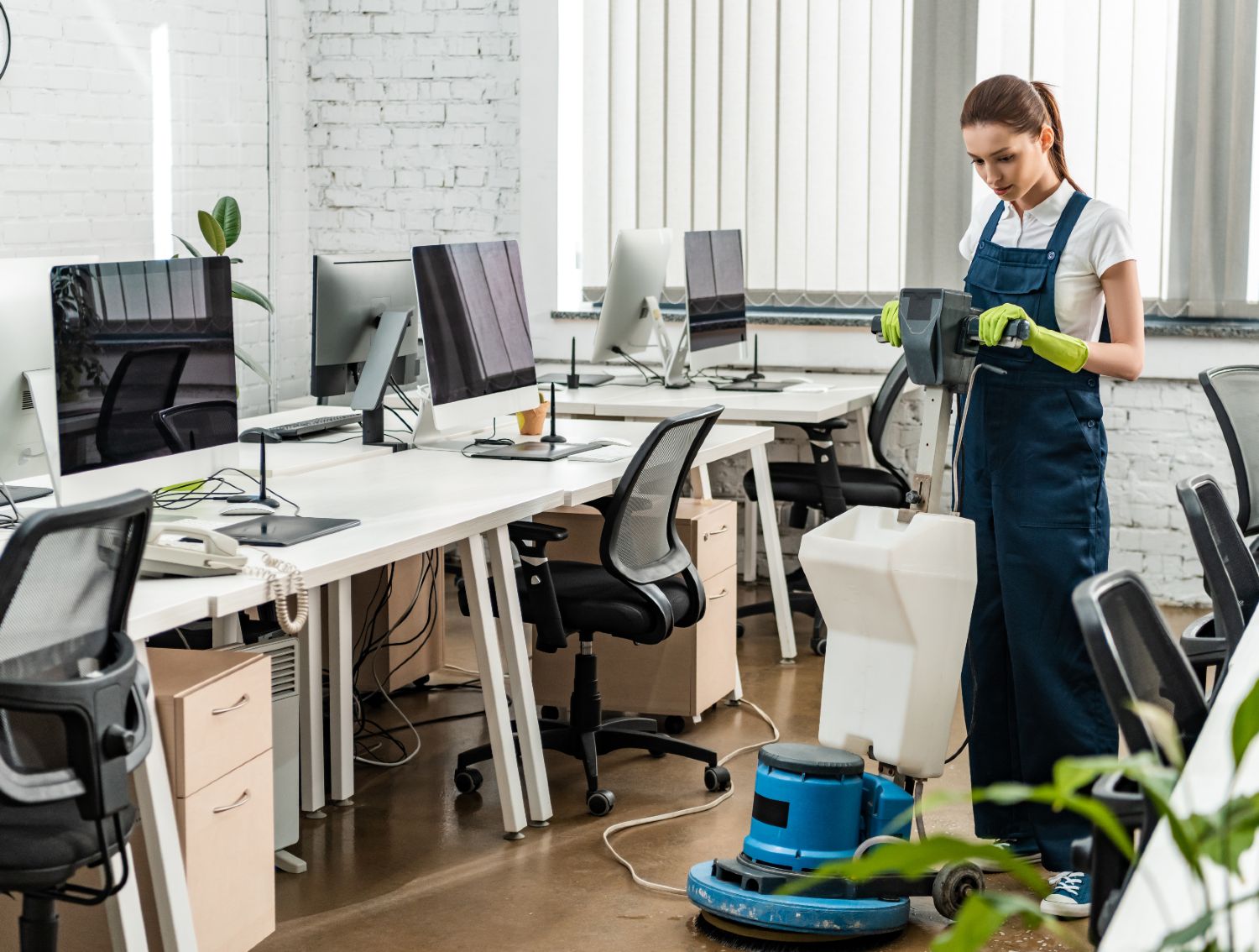
A consistently clean office is rarely something that happens on its own. Without a clear approach to cleaning and maintenance, common areas accumulate mess, workstations gather dust, and kitchen facilities tend to become a recurring source of complaints. This article outlines practical standards for office cleaning and explains how to structure an arrangement with a professional cleaning provider.
The guidance here is relevant to small offices with a handful of staff, open-plan environments with dozens of desks, and shared commercial spaces with multiple tenants. The principles are broadly consistent across office types, though the scale and frequency of work will vary.
Why Office Cleanliness Matters Beyond Appearances
The visible cleanliness of a workspace matters — for staff, for clients who visit, and for the general impression a business makes. But the case for a well-maintained office goes beyond that. Dusty surfaces, overflowing bins, and poorly maintained washrooms create a working environment that is less comfortable and can contribute to reduced morale over time. These are practical concerns, not abstract ones.
For businesses that receive visitors or clients, a clean office also reflects on the organization. First impressions are formed quickly, and the state of a space is part of that impression.
The goal of a regular office cleaning program is consistency — not perfection after every visit, but a baseline that is predictable and adequate for the needs of the space.
Core Areas That Require Regular Attention
Different parts of an office require different levels of attention and frequency. Here is a useful breakdown:
Washrooms and Kitchens
These are the highest-use areas in most offices and require the most frequent cleaning. Washrooms should be cleaned at minimum twice per week in small offices and daily in larger ones. Kitchens and breakrooms benefit from daily surface cleaning, sink cleaning, and bin emptying. Refrigerators should be cleared out regularly — either by staff or as part of a cleaning arrangement.
Common Areas and Reception
Entrance areas, hallways, meeting rooms, and waiting spaces should be vacuumed or mopped at least weekly. Meeting tables and chairs benefit from a wipe-down after use. Reception desks and lobby furniture accumulate dust and fingerprints and should be wiped regularly.
Workstations and Desks
Individual desks are a common source of disagreement about what a cleaning service should do. Many businesses instruct cleaning staff to wipe desks only if they are clear of items — a practical rule that protects against damage to papers, equipment, or personal belongings. Keyboards, phone handsets, and monitor screens are often handled by employees themselves rather than cleaning staff. It is worth establishing a clear policy on this early.
Floors
Office floors — whether carpet, hardwood, tile, or vinyl — accumulate foot traffic rapidly. Carpeted areas should be vacuumed at least weekly; hard floors should be swept and mopped on a similar schedule. High-traffic zones near entrances may need more frequent attention, particularly in winter months when mud and moisture are tracked inside.
Establishing a Cleaning Frequency
The right cleaning frequency depends on the size of your office, how many people use it, and the nature of the work. As a general guide:
- Small office (under 10 staff): Once or twice per week for a standard clean, with daily attention to kitchen and washroom supplies by staff or a dedicated service.
- Mid-size office (10–40 staff): Two to three times per week minimum, with daily cleaning of washrooms and kitchen areas.
- Larger or high-traffic offices: Daily cleaning is typically necessary. High-use areas may require attention more than once per day.
These are starting points, not rules. Observing how quickly your space deteriorates between cleans is the most reliable guide to how often cleaning is needed.
Working with a Professional Cleaning Provider
When engaging a cleaning company for your office, the quality of the arrangement depends heavily on the clarity of the initial setup. Ambiguous scope leads to missed areas, unmet expectations, and unnecessary friction. A few things to establish upfront:
Define the Scope in Writing
List the areas to be cleaned, the tasks to be performed in each area, and the frequency. Note explicitly anything that is excluded — particular rooms, equipment, or items. This document becomes the reference point for evaluating whether the service is being delivered as agreed.
Discuss Access and Scheduling
Most office cleaning is done outside business hours — early morning or evening. Confirm how the cleaning team will access the building, who to contact in case of questions, and what to do if they encounter something unexpected (a locked room, a spill, maintenance issue).
Establish Communication
Identify a single point of contact at your organization who manages the relationship with the cleaning provider. This prevents communication fragmentation — where different staff members give conflicting instructions or raise complaints through multiple channels. A cleaning provider should also have a clear contact for you to reach if there is a scheduling change or service concern.
Review the Arrangement Periodically
After the first month or two, review whether the service is meeting expectations. Is the frequency adequate? Are there areas consistently missed or inadequately addressed? This is the point to adjust the scope — not several months later after frustration has built up.
Staff Responsibility in Office Cleanliness
It is worth being direct about this: a professional cleaning service handles defined tasks at scheduled intervals. It does not replace basic day-to-day tidiness by staff. If communal areas are left in a poor state between cleaning visits, the benefit of regular cleaning is significantly reduced.
Most offices benefit from simple shared norms: staff clear their own dishes from the kitchen, common areas are tidied at the end of the day, and waste bins are used rather than surfaces. These are expectations that can be communicated clearly without requiring extensive enforcement.
Seasonal Considerations for Canadian Offices
Operating in a climate like Saskatchewan's introduces some practical considerations that affect office cleaning in ways that may not apply in warmer regions:
- Winter entry points: Doorways, lobbies, and hallway floors take a significant amount of mud, salt, and moisture from November through March. Entry mats need regular cleaning or replacement, and hard floors near entrances may need daily mopping during this period.
- Heating systems and dust: Forced air heating common in Saskatchewan's winter months distributes dust through office spaces more rapidly. Vents and surfaces may accumulate dust faster and benefit from more frequent wiping.
- Windows and light: The low-angle winter sun in the prairies makes fingerprints and smears on glass surfaces much more visible. Window cleaning at the start of winter can improve the appearance of an office for the season.
Summary
A well-maintained office is the product of consistent cleaning practices, a clearly defined service arrangement, and a basic level of daily tidiness from staff. It does not require elaborate systems or frequent deep cleans — it requires regularity and clarity about what is expected and who is responsible for what.
If you manage an office in Regina and are looking for a reliable cleaning arrangement, contact Ixvoria to discuss what a structured office cleaning program would look like for your space.